
The healthcare industry has embraced digital technology to improve communication, education, and patient engagement. One of the most effective tools used today is medical animation. Through high-quality 2D and 3D visuals, complex medical procedures, biological processes, and healthcare innovations can be explained in a simple and engaging way. As a result, medical animation companies have become valuable partners for hospitals, pharmaceutical brands, biotechnology firms, medical device manufacturers, universities, and healthcare marketing agencies.
These companies combine medical expertise with creative design to produce scientifically accurate animations that educate patients, support physician training, promote medical products, and improve public understanding of healthcare topics. Whether it’s demonstrating how a new medication works or explaining a surgical procedure, professional medical animations help communicate information more effectively than text or static images alone.
What Are Medical Animation Companies?
Medical animation companies are specialized studios that create animated content focused on healthcare, medicine, biology, and life sciences. Their teams often include medical illustrators, 3D artists, animators, writers, and healthcare professionals who work together to ensure every animation is both visually appealing and scientifically accurate.
Their services are used across many industries, including:
- Healthcare organizations
- Pharmaceutical companies
- Biotechnology firms
- Medical device manufacturers
- Universities and research institutions
- Healthcare marketing agencies
- E-learning providers
By transforming complex medical concepts into engaging visuals, these companies make information easier to understand for both professionals and the general public.
Why Medical Animation Is Important
Medical topics often involve technical language and complicated biological processes. Reading lengthy medical documents can be challenging, especially for patients without a healthcare background. Animation bridges this gap by presenting information in an easy-to-follow visual format.
Some key benefits include:
- Better patient education
- Improved physician training
- Increased engagement during presentations
- More effective product demonstrations
- Stronger healthcare marketing campaigns
- Enhanced online learning experiences
Visual learning also improves information retention, making animation a valuable educational tool.
Services Offered by Medical Animation Companies
Professional medical animation studios typically provide a wide range of creative services tailored to healthcare organizations.
1. 3D Medical Animation
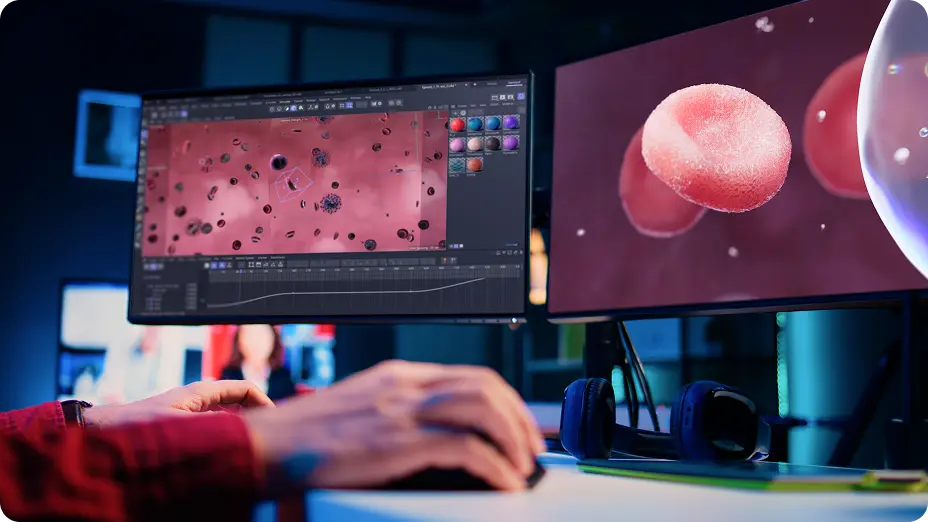
Three-dimensional animations accurately illustrate internal organs, surgical procedures, cellular functions, and disease progression. These animations are widely used in medical education and pharmaceutical marketing.
2. Mechanism of Action (MOA) Animation
MOA animations explain how drugs interact with the human body at the molecular or cellular level. Pharmaceutical companies frequently use these videos to educate healthcare professionals and investors.
3. Surgical Procedure Animation
These animations demonstrate complex surgeries step by step, helping patients understand treatment options while supporting physician training programs.
4. Medical Device Animation
Medical device manufacturers use animation to demonstrate how equipment functions, how it should be operated, and its clinical benefits.
5. Patient Education Videos
Hospitals and clinics use animated videos to explain diagnoses, treatment plans, preventive care, and recovery processes in a simple, patient-friendly format.
6. Biotechnology Visualization
Biotechnology companies rely on animation to explain laboratory research, genetic engineering, vaccine development, and other scientific innovations.
Industries That Benefit from Medical Animation
Medical animation has applications far beyond hospitals.
Healthcare Providers
Hospitals and clinics use animations to educate patients before surgery, explain medical conditions, and improve communication during consultations.
Pharmaceutical Companies
Drug manufacturers use animation during product launches, conferences, investor meetings, and physician education programs.
Medical Device Companies
Animations showcase the design, functionality, and advantages of medical equipment far more effectively than printed manuals.
Universities
Medical schools and universities integrate animations into lectures, online courses, and research presentations.
Biotechnology Firms
Researchers use animations to communicate scientific discoveries and complex laboratory processes to investors and industry professionals.
Characteristics of High-Quality Medical Animation
Not all animations provide the same value. High-quality productions share several important characteristics.
Scientific Accuracy
Every animation should accurately represent anatomy, physiology, and medical procedures while following current scientific knowledge.
Professional Visual Design
Clean graphics, realistic movement, and detailed modeling improve viewer understanding and maintain credibility.
Clear Storytelling
An effective animation presents information in a logical sequence that guides viewers through each concept without overwhelming them.
High Resolution
Modern animations should support Full HD or 4K quality for presentations, conferences, websites, and marketing campaigns.
Custom Branding
Healthcare organizations often request customized colors, logos, and messaging that match their brand identity.
How to Choose the Right Medical Animation Company
Selecting the right partner requires careful evaluation.
Review Their Portfolio
Examine previous healthcare projects to determine whether the company has experience with medical topics similar to your own.
Verify Medical Expertise
Companies that collaborate with physicians, researchers, or certified medical illustrators often produce more accurate educational content.
Assess Communication
Successful projects depend on regular communication, clear timelines, and detailed project planning.
Consider Industry Experience
Experience in pharmaceuticals, biotechnology, healthcare, or medical devices often leads to better project outcomes.
Understand Revision Policies
A reliable company should provide opportunities for client feedback throughout the production process.
Emerging Trends in Medical Animation
Technology continues to transform healthcare visualization.
Artificial Intelligence
AI tools assist with animation workflows, improving production efficiency while allowing artists to focus on creativity.
Virtual Reality
VR simulations enable medical students and surgeons to practice procedures in highly immersive environments.
Augmented Reality
AR applications allow healthcare professionals to visualize anatomy and treatment plans using smartphones or wearable devices.
Interactive Learning
Interactive animations encourage users to explore medical topics at their own pace, improving engagement and retention.
Personalized Healthcare Content
Organizations increasingly create customized educational videos designed for specific patient groups and medical conditions.
Benefits for Healthcare Marketing
Medical animation has become an essential part of digital healthcare marketing strategies.
Organizations use animated content to:
- Increase website engagement
- Improve social media performance
- Support product launches
- Simplify complex healthcare information
- Build trust with patients
- Enhance conference presentations
- Strengthen brand credibility
Well-produced animations can communicate detailed medical information within minutes, making them highly effective marketing assets.
Future of Medical Animation
As healthcare becomes more technology-driven, demand for professional medical animation continues to grow. Advances in artificial intelligence, real-time rendering, virtual reality, and 3D visualization are making animations even more realistic and interactive.
Healthcare organizations increasingly medical animation companies recognize that visual communication improves education, supports informed decision-making, and strengthens relationships with patients and healthcare professionals alike.
Conclusion
Medical animation has transformed how healthcare information is communicated around the world. From explaining complex surgical procedures to demonstrating the effectiveness of new pharmaceutical treatments, animated content makes difficult medical concepts easier to understand and more engaging for every audience.