

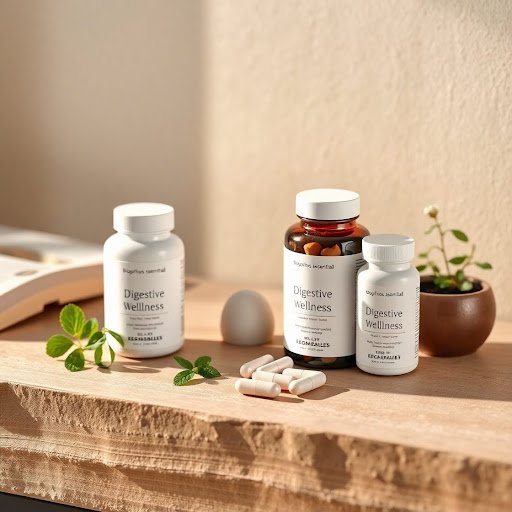
Our gut health is really important for our overall well-being. It helps our immune system, affects our mood, and keeps us healthy. Many people use digestive health supplements to help keep their gut balanced and healthy. These supplements can help with different parts of gut health, like adding good bacteria and helping our body absorb nutrients better. Let’s look at how these supplements can help keep our gut healthy and make us feel good.
Key Takeaways: Digestive Health Supplements
- Support a balanced gut microbiome
- Contain probiotics, prebiotics, and digestive enzymes
- Enhance nutrient absorption and digestion
- May reduce inflammation and support immune function
- Work best as part of a holistic approach to gut health
- Should be chosen based on individual needs and health goals
Understanding the Gut Microbiome
The gut microbiome is a big group of tiny living things in our digestive system. These little helpers do important jobs like:
- Breaking down food and absorbing nutrients
- Producing essential vitamins and short-chain fatty acids
- Supporting our immune system and modulating inflammation
- Influencing our mood and mental health through the gut-brain axis
- Maintaining the integrity of the gut lining
When our gut microbiome is out of balance, we call it dysbiosis. This can cause problems like tummy troubles, weak immunity, and even mood changes. Things like poor diet, stress, antibiotics, and toxins can upset this balance. This is where digestive health supplements can help by giving our gut the support it needs to stay healthy.
Key Components of Digestive Health Supplements
Digestive health supplements usually have different ingredients that help our gut. Each part does something special to keep our digestive system happy and healthy:
1. Probiotics
Probiotics are good bacteria that help keep our gut balanced. These friendly bugs can:
- Improve digestion and reduce tummy troubles
- Boost our immune system
- Reduce inflammation in our body
- Help stop bad bacteria from taking over
- Make good stuff our body needs
- Keep our gut lining strong
MicroBiome Restore™ is a good example of a probiotic supplement. It has many types of good bacteria to help our gut stay healthy.
2. Prebiotics
Prebiotics are special fibers that feed the good bacteria in our gut. They help:
- Make good bacteria grow and work better
- Keep our poop regular
- Help our body absorb nutrients better
- Reduce inflammation in our gut
- Support our body’s sugar control
Some supplements have both probiotics and prebiotics, which work really well together. You can also find prebiotics in foods like garlic, onions, bananas, and Jerusalem artichokes.
3. Digestive Enzymes
Digestive enzymes help break down our food so our body can use it better. These special helpers can:
- Help our body absorb more nutrients
- Reduce tummy discomfort, bloating, and gas
- Make our gut healthier by making digestion easier
- Help if our body doesn’t make enough enzymes
- Make probiotics work even better
There are different types of digestive enzymes for different types of food. Some supplements also have special enzymes for people who can’t digest certain foods well.
4. Minerals and Vitamins
Some minerals and vitamins are really important for keeping our gut healthy. For example, zinc helps keep our gut lining strong, and vitamin D helps our immune system in the gut. Other important nutrients for gut health include:
- Magnesium: Helps the muscles in our digestive system work
- Vitamin C: Protects our gut and helps make it strong
- B vitamins: Give energy to the cells in our gut
- Selenium: Helps protect our gut and supports our thyroid, which affects digestion
How Digestive Health Supplements Support Gut Balance
Digestive health supplements help keep our gut balanced in several ways:
1. Restoring Microbial Balance
Probiotics in supplements help keep the right mix of bacteria in our gut. This balance is important for good digestion, absorbing nutrients, and keeping our immune system strong. By adding good bacteria, these supplements can help crowd out bad bacteria and keep our gut diverse and healthy.
2. Reducing Inflammation
Many ingredients in digestive supplements help reduce inflammation in our gut. This can make our tummy feel better and keep our gut healthy. Some probiotics can help control inflammation, and prebiotics can help make things that fight inflammation. Less inflammation in our gut can help with conditions like inflammatory bowel disease and even inflammation in other parts of our body.
3. Enhancing Nutrient Absorption
Digestive enzymes and some probiotics help our body break down food better and absorb more nutrients. This means our body gets more good stuff from the food we eat. Better nutrient absorption can give us more energy and help our body work better overall.
4. Supporting Gut Barrier Function
Some parts of digestive supplements help make the lining of our gut stronger. This is important to stop bad things from getting into our blood. A healthy gut barrier helps prevent “leaky gut” and other health problems. Things like glutamine, zinc, and certain probiotics can help keep our gut lining strong and healthy.
5. Regulating Bowel Movements
Many digestive health supplements can help make our poop more regular, reducing problems like constipation or diarrhea. Probiotics can help make our poop more normal, while prebiotics add bulk to our poop and help us go regularly. This can make us feel more comfortable, reduce bloating, and help our digestive system work better overall.
Benefits of Digestive Health Supplements
- Restore microbial balance in the gut
- Reduce inflammation in the digestive system
- Enhance absorption of essential nutrients
- Support the gut barrier function
- Regulate and improve bowel movements
Choosing the Right Digestive Health Supplements
When picking digestive health supplements, think about these things:
- Specific strains of probiotics for your needs: Different types do different things, so choose based on what you want to improve
- Quality and potency of ingredients: Look for supplements from good companies that test their products
- Presence of prebiotics for synergistic effects: Combinations of probiotics and prebiotics can work better together
- Additional beneficial ingredients like digestive enzymes or herbs: These can provide extra support
- Your individual health concerns and goals: Think about any health issues you have or what you want to improve
- Shelf stability and storage requirements: Make sure the supplement will stay good in your home
- Allergen information: Check for any ingredients you might be allergic to
It’s a good idea to talk to a doctor or health expert before starting any new supplements, especially if you have health problems or take medicine. They can help you choose the best supplements for you.
Complementary Strategies for Gut Health
Digestive health supplements work best when you also do other things to keep your gut healthy. Try these tips:
1. Balanced Diet
Eat lots of different foods with fiber, like fruits, vegetables, and whole grains. These feed the good bacteria in your gut. Try to get 25-30 grams of fiber every day from different foods. Also, eat fermented foods like yogurt, kefir, sauerkraut, and kimchi, which have natural probiotics. Don’t eat too many processed foods, artificial sweeteners, or too much sugar, because these can be bad for your gut.
2. Stay Hydrated
Drinking enough water helps your digestion work well and supports the good bacteria in your gut. Try to drink at least 8 glasses of water every day, or more if you’re active or it’s hot outside. Herbal teas can also help you stay hydrated and can be good for your digestion, especially ones like peppermint or ginger.
3. Manage Stress
Being stressed for a long time can be bad for your gut. It can change how your gut moves, cause inflammation, and upset the balance of bacteria. Try things like meditation, yoga, or deep breathing to reduce stress. You can also try being mindful when you eat, which can help your digestion and reduce stress-related tummy problems.
4. Regular Exercise
Moving your body regularly helps your gut work better and can keep the bacteria in your gut healthy. Try to do at least 30 minutes of exercise most days. This could be walking fast, riding a bike, swimming, or any kind of movement you like. Regular exercise can increase the variety of bacteria in your gut and help your digestion work better overall.
5. Limit Processed Foods
Foods that are very processed can upset the balance of bacteria in your gut and often have things added that might not be good for gut health. Instead, focus on whole foods that are full of nutrients. Eat lots of colorful fruits and vegetables, lean proteins, healthy fats, and whole grains. These foods give your gut the nutrients and fiber it needs to stay healthy.
Common Myths About Digestive Health Supplements
Let’s clear up some common misunderstandings about digestive health supplements:
Myth: All probiotics are the same
Reality: Different strains have different effects
Myth: Enzymes only for diagnosed conditions
Reality: Can benefit many by improving nutrient absorption
Myth: Gut health doesn’t affect overall health
Reality: Closely connected to immune function, mental health, and more
Myth: Supplements can replace a healthy diet
Reality: Work best in conjunction with balanced, nutrient-rich diet
Myth 1: All probiotics are the same
Reality: Different types of probiotics do different things in our body. Some are better for helping our immune system, while others might help more with tummy troubles. For example, one type called Lactobacillus rhamnosus GG has been studied a lot for helping with diarrhea, while another type called Bifidobacterium longum might help with mental health. It’s important to choose probiotics based on what you need and what research says they can do.
Myth 2: You only need digestive enzymes if you have a diagnosed condition
Reality: While digestive enzymes are really important for people with certain health problems, they can help lots of people by making it easier to absorb nutrients and reducing tummy discomfort. As we get older, our body might not make as many enzymes naturally, and things like stress and not eating well can affect how our enzymes work. Taking digestive enzyme supplements can help many people digest their food better and get more nutrients from it.
Myth 3: Gut health doesn’t affect overall health
Reality: Our gut is connected to many parts of our health, including our immune system, mental health, and even our skin. A healthy gut can help us feel better overall. For example, there’s a connection between our gut and our brain that can affect our mood, how we think, and how we handle stress. Also, about 70% of our immune system is in our gut, which shows how important gut health is for keeping us healthy and preventing diseases.
Myth 4: Supplements can replace a healthy diet
Reality: While digestive health supplements can be helpful, they work best when we also eat a balanced diet with lots of nutrients. They should add to, not replace, healthy eating habits. Eating a variety of whole foods gives our body many different nutrients, fibers, and compounds that support gut health in ways that supplements alone can’t. Using both a healthy diet and the right supplements often gives the best results for digestive and overall health.
Conclusion: Embracing Gut Health with Digestive Supplements
Digestive health supplements can be really helpful in keeping our gut balanced and healthy. They give our gut good bacteria, food for those bacteria, and important nutrients. These supplements can help improve our digestion, boost our immune system, and make us feel better overall. Our gut is really important for many things our body does, so keeping it balanced is key to staying healthy.
Remember, the best way to keep our gut healthy is to do many different things. Use good quality digestive health supplements, eat a balanced diet with lots of fiber and nutrients, exercise regularly to keep our gut moving and diverse, find ways to manage stress, and keep up other healthy habits. By taking care of our gut, we’re helping our whole body stay healthy and strong, which can affect everything from how well our immune system works to how we feel mentally.
If you’re thinking about using digestive health supplements, it’s a good idea to talk to a doctor or health expert first. They can help you figure out which supplements are best for you based on your specific health needs and goals. With the right approach, you can support your gut health and enjoy the many benefits of a balanced, healthy digestive system, which can help you feel better overall.
Leave a Reply