

ETL process optimization is a critical aspect of modern data management. ETL stands for Extract, Transform, and Load, which is the process of collecting data from multiple sources, converting it into a usable format, and loading it into a data warehouse or analytics platform. As organizations generate massive volumes of data every day, optimizing ETL workflows has become essential for maintaining speed, accuracy, and scalability.
Poorly optimized ETL processes can lead to slow reporting, delayed business decisions, increased infrastructure costs, and data quality issues. Whether an organization uses cloud-based platforms or on-premises systems, efficient ETL pipelines ensure that decision-makers receive accurate and timely information. By focusing on ETL process optimization, businesses can improve operational efficiency, reduce processing time, and support advanced analytics initiatives.
What Is ETL Process Optimization?
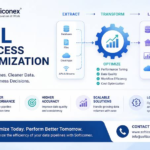
ETL process optimization refers to improving the efficiency, reliability, and performance of the Extract, Transform, and Load workflow. The goal is to move data from source systems to destination platforms as quickly and accurately as possible while minimizing resource consumption.
Optimization involves evaluating every stage of the ETL pipeline to identify bottlenecks and improve execution. This includes reducing unnecessary data extraction, simplifying transformations, optimizing database queries, and improving loading performance.
An optimized ETL process ensures that data is available for reporting and analytics without unnecessary delays, allowing organizations to make faster and more informed decisions.
Understanding the ETL Process
The ETL process consists of three interconnected stages. During the extraction phase, raw data is collected from multiple sources such as relational databases, cloud applications, spreadsheets, APIs, enterprise software, and IoT devices.
The transformation phase converts raw data into a standardized format. This stage may include cleansing, validation, deduplication, aggregation, normalization, and applying business rules.
Finally, the loading phase transfers the transformed data into a destination such as a data warehouse, business intelligence platform, or cloud data lake where it becomes available for reporting and analysis.
Each phase contributes to overall performance, making optimization important throughout the entire workflow.
Why ETL Process Optimization Matters
Organizations increasingly rely on real-time insights to remain competitive. Slow ETL pipelines delay reporting, limit business intelligence capabilities, and reduce organizational agility.
Optimized ETL workflows improve system performance while reducing infrastructure costs. They also increase data reliability by minimizing transformation errors and duplicate records.
As businesses adopt artificial intelligence, machine learning, and predictive analytics, the need for clean and efficiently processed data continues to grow. ETL process optimization provides the reliable foundation required for these advanced technologies.
Without optimized pipelines, organizations struggle to extract maximum value from their growing data assets.
Optimizing Data Extraction
The extraction stage directly affects overall ETL performance. Retrieving unnecessary data increases processing time and places additional strain on source systems.
Incremental extraction techniques retrieve only newly created or modified records instead of processing complete datasets repeatedly. This approach significantly reduces network traffic and database workload.
Filtering unnecessary columns and records during extraction also improves efficiency. Collecting only relevant information minimizes storage requirements while accelerating downstream processing.
Scheduling extraction during periods of lower system activity further reduces operational impact on production databases.
These improvements establish a strong starting point for ETL process optimization.
Improving Transformation Performance
Data transformation often consumes the greatest amount of processing time. Complex business rules, excessive calculations, and inefficient queries can dramatically slow ETL execution.
Transformation performance improves when unnecessary processing steps are eliminated and related operations are consolidated. Efficient SQL queries, optimized joins, and parallel processing also reduce execution time.
Early validation helps identify data quality issues before they propagate throughout the pipeline. Standardizing formats and removing duplicate records during transformation improves consistency while reducing future corrections.
Organizations should regularly review transformation logic to eliminate outdated rules that no longer provide business value.
Efficient transformation enables faster reporting while improving overall data quality.
Accelerating Data Loading
The loading stage determines how quickly processed information becomes available for business users.
Bulk loading techniques generally outperform row-by-row insertion methods, especially when processing millions of records. Partitioning destination tables also improves loading speed while simplifying future maintenance.
Database indexes should be managed carefully because excessive indexing may reduce insertion performance. Organizations often rebuild indexes after large data loads to maintain optimal query performance.
Transaction management is equally important because excessively large transactions may consume unnecessary system resources while smaller batches often improve reliability.
Optimizing loading operations completes the ETL pipeline efficiently.
Data Quality in ETL Process Optimization
High-quality data remains essential regardless of processing speed. Even the fastest ETL pipeline delivers limited value if inaccurate information reaches business users.
Data quality initiatives include validating required fields, eliminating duplicate records, correcting inconsistent formats, and enforcing business rules before loading.
Regular profiling identifies recurring quality issues while monitoring ensures long-term consistency.
Organizations should implement automated validation procedures that immediately detect anomalies before they affect reporting accuracy.
Maintaining strong data quality significantly improves confidence in business intelligence and analytics.
Automation and ETL Optimization
Automation plays a major role in modern ETL process optimization. Automated scheduling eliminates manual intervention while ensuring data pipelines execute consistently.
Workflow orchestration platforms coordinate multiple ETL tasks, monitor dependencies, and recover automatically from temporary failures.
Alert systems notify administrators whenever processing errors occur, reducing downtime and enabling faster problem resolution.
Automation also supports continuous integration and continuous deployment by simplifying workflow updates without disrupting ongoing operations.
These capabilities improve both efficiency and reliability.
Cloud-Based ETL Process Optimization
Cloud computing has transformed ETL architecture by providing flexible and scalable infrastructure.
Cloud-native ETL platforms automatically allocate computing resources based on workload demands, allowing organizations to process large datasets without investing in expensive hardware.
Distributed computing frameworks improve processing speed by executing multiple tasks simultaneously across several servers.
Cloud storage services integrate seamlessly with analytics platforms, enabling near real-time reporting and advanced machine learning applications.
Cloud technologies therefore provide significant opportunities for improving ETL performance while reducing operational costs.
Monitoring ETL Performance
Continuous monitoring is essential for maintaining optimized ETL pipelines. Performance metrics reveal processing speed, throughput, resource utilization, execution failures, and bottlenecks.
Organizations should monitor execution times for every workflow stage while analyzing database performance and infrastructure utilization.
Historical performance trends help identify gradual efficiency declines before they become critical problems.
Regular monitoring also supports proactive optimization by highlighting opportunities for workflow improvements.
Performance management should remain an ongoing process rather than a one-time activity.
Common Challenges in ETL Process Optimization
Growing data volumes continue creating new optimization challenges. Processing increasingly complex datasets requires scalable architecture and efficient resource management.
Integrating data from multiple systems introduces inconsistent formats and varying quality standards.
Legacy infrastructure often lacks compatibility with modern cloud platforms, increasing integration complexity.
Rapidly changing business requirements require frequent modifications to transformation logic and reporting structures.
Successfully addressing these challenges requires flexible ETL architecture combined with continuous performance evaluation.
Best Practices for ETL Process Optimization
Organizations should design ETL workflows with simplicity, scalability, and maintainability in mind. Incremental loading, optimized SQL queries, automated validation, and efficient resource allocation contribute to improved performance.
Data governance policies ensure consistent transformation standards across multiple departments and projects.
Comprehensive documentation simplifies future maintenance while helping new team members understand workflow design.
Regular testing confirms that optimization efforts improve performance without compromising data quality or business requirements.
Continuous improvement remains essential because both data volumes and business needs continue evolving.
Future Trends in ETL Process Optimization
Emerging technologies are reshaping ETL development. Artificial intelligence increasingly assists with automated schema mapping, anomaly detection, workflow recommendations, and predictive resource allocation.
Real-time streaming architectures reduce latency by processing information continuously instead of relying solely on scheduled batch operations.
Serverless computing further improves scalability while minimizing infrastructure management responsibilities.
Low-code ETL platforms enable faster development while expanding access to data integration technologies.
These innovations will continue making ETL process optimization more intelligent, automated, and efficient.
Conclusion
ETL process optimization is essential for organizations seeking fast, reliable, and scalable data integration. By improving extraction methods, streamlining transformations, accelerating data loading, maintaining high data quality, and leveraging automation, businesses can significantly enhance their analytics capabilities.
As organizations continue generating larger volumes of information, optimized ETL workflows will become even more valuable for supporting business intelligence, artificial intelligence, and real-time decision-making. Investing in ETL process optimization not only improves operational efficiency but also creates a strong foundation for long-term digital transformation and sustainable business growth.


Pretty section of content. I just stumbled upon your site and in accession capital to assert that
I acquire actually enjoyed account your blog posts.
Anyway I will be subscribing to your feeds and even I achievement you
access consistently fast.